
Budget hotels quartz stone
Budget hotels quartz stone needs to balance cost, durability, cleanliness and aesthetics. Caesarstone-equivalent brands offer versatile options, from solid color to thin-slab models, fitting all budget hotels’ scenarios.
By controlling parameters, choosing the right brands and doing proper maintenance, budget hotels can cut costs. High-quality quartz stone also improves guest experience and hotel image in the international market.
For budget hotels quartz stone selection, the core is balancing durability, easy cleaning and cost. It is the top choice for front desks and guest rooms, thanks to its high cost-effectiveness. This article offers practical tips to help budget hotels pick suitable quartz stone and cut long-term costs.
I. Core Principles for Selecting Quartz Stone for Budget Hotels
Budget hotels have special operational needs, so their quartz stone must meet three key requirements. First, it needs strong durability to withstand high traffic. Besides, it should be easy to clean to save labor costs. Finally, it must balance quality and cost for selection.
Durability is crucial for budget hotels quartz stone. Hotels have large passenger flow, so quartz stone must have Mohs hardness ≥7 and quartz content ≥93% to avoid cracking or scratching during long-term use.
Easy cleaning also matters. A non-porous surface (water absorption < 0.02%) allows quick wiping, eliminating the need for frequent professional maintenance and saving time.
For cost balance, choose Caesarstone-equivalent brands like Silestone. Avoid low-quality products, as they raise later maintenance costs. Additionally, light-colored quartz stone is better for hiding stains.
II. Recommended Mainstream Quartz Stone Varieties for Budget Hotels
(I) Solid Color Fine-Grained Quartz Stone – Universal for Guest Rooms and Front Desks
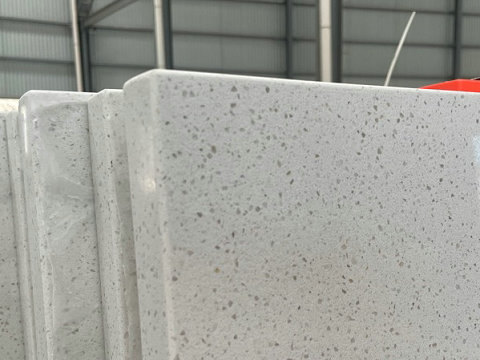
Solid color fine-grained quartz stone is a universal option, available in off-white and light gray. It has even particles, a clean look, and fits various hotel styles. It boasts ≥93% quartz content and excellent stain resistance.
This quartz stone has three core advantages. It is stain-resistant and easy to maintain; its cost is controllable for bulk purchases. Moreover, it suits multiple areas, from front desks to bathroom vanities, unifying the hotel’s look.
Representative varieties include Silestone solid color series. They match Caesarstone’s quality, resist high temperatures and yellowing, and are ideal for bulk purchases for budget hotels.
(II) Marble-Like Light-Vein Quartz Stone – For Restaurants and Public Areas
Marble-like light-vein quartz stone mimics natural marble’s elegance but avoids its high cost. It has a light gray base with delicate veins, making it perfect for restaurants and public areas.
This quartz stone uses a two-color mixing process, ensuring natural textures without increasing the budget. It has 90-92% quartz content, resisting scratches and acid, suitable for busy restaurant workstations.
Silestone light-vein series and Corian marble-like models are top choices. They support customization, offer seamless splicing, and meet international standards for budget hotels.
(III) Antibacterial Quartz Stone – Special for Catering and Kitchens
Antibacterial budget hotels quartz stone is essential for hotel kitchens. It contains silver ions, passes SGS certification, and inhibits bacteria growth, meeting food hygiene standards for budget hotels.
This quartz stone has a non-porous surface, resisting oil and corrosion. It withstands high temperatures (≤300℃) and has a service life of over 10 years, reducing long-term maintenance costs.
Silestone and Cambria antibacterial series are ideal. With ≥93% quartz content, they offer project prices for bulk purchases, fitting kitchen needs for budget hotels.
(IV) Thin-Slab Quartz Stone – For Extreme Budget Compression
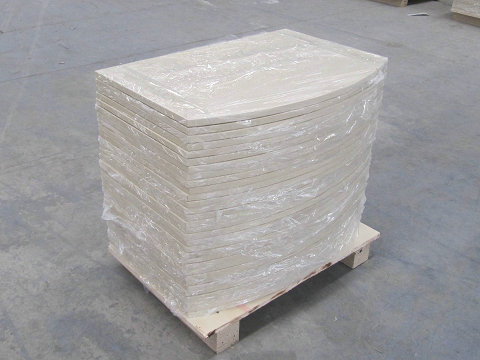
Thin-slab quartz stone (1.2-1.5cm) cuts costs by 20-25%, suitable for budget-tight hotels. It works for non-load-bearing areas like guest room desks and non-critical front desk surfaces.
This quartz stone needs ≥90% quartz content and honeycomb gaskets for support to avoid cracking. It is cost-saving, meets basic durability needs, and simplifies installation for budget hotels.
Note: Never use this quartz stone for load-bearing or high-frequency areas like kitchens, as it may crack and cause rework.
III. Guidelines for Quartz Stone Selection in Different Scenarios
(I) Front Desk Area
Prioritize solid color fine-grained budget hotels quartz stone (off-white, light gray) from Caesarstone-equivalent brands. Choose 1.8-2.0cm thickness with 45° bevel splicing. For better image, upgrade to light-vein models; for savings, stick to basic solid colors.
(II) Guest Room Area
Unify solid color quartz stone for guest room desks, bedside tables and vanities. Light colors hide stains, while corrosion-resistant varieties prevent yellowing from toiletries, ensuring long-term quality for budget hotels.
(III) Restaurant and Kitchen Area
Use marble-like light-vein quartz stone for restaurant workstations and antibacterial models for kitchens. Both need 1.8-2.0cm thickness. Add metal brackets around sinks to avoid sagging and cracking for budget hotels.
(IV) Public Areas
Choose light-vein or solid color quartz stone from Caesarstone-equivalent brands. Light colors suit public spaces, are easy to clean, and reduce cleaning workload for budget hotels.
IV. Key Points for Avoiding Pitfalls in Purchasing Quartz Stone for Budget Hotels
Clearly mark key parameters in contracts for budget hotels quartz stone, such as ≥93% quartz content and die-casting process. Reject vague terms and specify Caesarstone-equivalent brands to avoid low-quality products.
Conduct on-site inspections. Scratch with a key, drop white vinegar and soy sauce to test authenticity. Also, check brand logos to ensure genuine products for budget hotels.
Choose reliable brands, such as Silestone and Corian. They offer stable quality, after-sales service and project prices for bulk purchases, fitting budget hotels’ needs.
Pay attention to installation. Use gaskets for even force and 45° splicing to reduce joints, maximizing the durability of quartz stone.
V. Daily Maintenance Points of Quartz Stone (Reduce Long-Term Costs)
Clean budget hotels quartz stone with water and neutral detergent, using a soft cloth. Avoid steel wool and strong acids, as they scratch the surface and corrode the resin layer.
Use heat insulation pads for hot pots to protect it. Local high temperatures (>120℃) can cause microcracks and discoloration, damaging the quartz stone’s appearance.
Remove stubborn stains with baking soda paste or a little alcohol. Avoid direct use of corrosive liquids to keep quartz stone clean long-term.
Inspect joints every 3 years. Re-glue aging resin and repair slight scratches with sandpaper and paste to extend the service life.
Handle heavy objects gently to avoid impacting corners, especially sink openings. This prevents cracking and reduces maintenance costs for budget hotels.
FAQ
1. What is the core requirement for budget hotels quartz stone selection?
The core is to balance three key factors: durability, easy cleaning, and cost-effectiveness. It must withstand high traffic, be easy to clean to save labor costs, and fit the budget of budget hotels without sacrificing quality.
2. Which quartz stone varieties are suitable for budget hotels?
Four main varieties are recommended: solid color fine-grained quartz stone (universal for guest rooms and front desks), marble-like light-vein quartz stone (for restaurants and public areas), antibacterial quartz stone (for kitchens), and thin-slab quartz stone (for extreme budget compression).
3. What brands are equivalent to Caesarstone for budget hotels quartz stone?
Internationally renowned brands with the same grade and quality as Caesarstone include Silestone (from Spain’s Cosentino Group), Corian (from DuPont Group), and Cambria. They offer stable quality and cost-effectiveness for budget hotels.
4. What key parameters should be noted when purchasing budget hotels quartz stone?
Clearly specify three parameters in the contract: quartz content ≥93% (basic requirement), die-casting process, and thickness ≥1.5cm (basic) or ≥1.8cm (high-traffic areas). Reject vague terms like “artificial stone.”
5. How to test the authenticity of budget hotels quartz stone on-site?
Three simple tests: scratch with a key (genuine leaves metal marks, fake sheds white powder); drop white vinegar (no bubbles for genuine, bubbles for calcium-mixed fake); do a 10-minute soy sauce stain test (genuine wipes clean without traces).
6. Can thin-slab quartz stone be used for all areas of budget hotels?
No. Thin-slab quartz stone (1.2-1.5cm) is only suitable for non-load-bearing, low-traffic areas like guest room desks. It is strictly prohibited for load-bearing or high-frequency areas such as kitchens and front desk countertops to avoid cracking.
7. What are the daily maintenance tips for budget hotels quartz stone?
Use water and neutral detergent with a soft cloth for cleaning; avoid steel wool and strong acids/alkalis. Use heat insulation pads for hot pots, remove stubborn stains with baking soda paste, and inspect joints every 3 years for re-gluing if needed.
8. Why is antibacterial quartz stone necessary for budget hotel kitchens?
It contains antibacterial ingredients (e.g., silver ions) and passes SGS certification, inhibiting bacteria like Escherichia coli and Staphylococcus aureus. Its non-porous surface resists oil and corrosion, meeting international food hygiene standards.
9. How to balance cost and quality when choosing budget hotels quartz stone?
Choose Caesarstone-equivalent brands (Silestone, Corian, Cambria) for bulk purchases to get project prices. Prioritize light-colored, easy-to-maintain varieties to reduce long-term maintenance costs.
10. What thickness of quartz stone is suitable for different areas of budget hotels?
High-traffic areas (front desks, kitchens, restaurant workstations) need 1.8-2.0cm thickness; non-load-bearing, low-traffic areas can use 1.2-1.5cm thin-slab quartz stone.